Beyond Clicks: The Hidden Variables
Businesses often obsess over cost per click and click‑through rates. They craft irresistible ad copy and eye‑catching images, then wonder why conversions are low. The truth is that platforms like Google and Meta evaluate more than just your ad. They assess what happens after the click. Google Ads, for example, calculates a Quality Score that reflects ad relevance, expected click‑through rate and landing page experience. This score affects your ad ranking and the cost you pay per click. A compelling ad with a poor landing page experience will be penalized. Understanding how Google evaluates landing pages helps you optimize campaigns and reduce costs.
Relevance and Consistency
First, Google looks for relevance: does the content on your landing page match the promise of your ad? If your ad says “Get 50 percent off running shoes,” but your landing page promotes sandals, your Quality Score will suffer. Relevance is not just about the headline; it’s about the entire content of the page. If your ad highlights free shipping, your landing page should mention it. If your ad offers a discount, the landing page should display the discount code prominently. Consistency builds trust with visitors and signals to Google that your ad is honest.
Usability and Ease of Navigation
Google also measures usability. This includes page speed, mobile-friendly design, clear navigation, and the absence of pop‑ups that impede access. A page that loads quickly and displays correctly on all devices signals quality. On mobile, scrolling and completing forms should be easy. If your landing page is slow or confusing, users will bounce, and your Quality Score will drop. Making your page accessible to people with disabilities—via alt text, keyboard navigation and proper colour contrast—further improves the experience.
Encourage Action With a Clear CTA
Third, Google rewards landing pages that encourage the intended action without overloading users. A clear, singular call to action (CTA) helps users know what to do next—sign up, buy now or download. If your landing page has multiple CTAs or forces users through a maze of steps, Google interprets it as a poor experience. A great CTA stands out visually and uses action‑oriented language. Complement the CTA with a short form; don’t ask for unnecessary information. Request only what you need for that stage of the relationship.
A Real World Example
Imagine an online learning platform promoting a free coding bootcamp through Google Ads. Their ad reads, “Learn to code in 12 weeks—Enroll for free today.” Their original landing page looked pretty but contained a lengthy company history, testimonials, multiple videos, four CTAs (Enroll, Watch Demo, View Pricing, Subscribe to Newsletter) and a pop‑up offering 10 percent off their paid courses. The page took nearly five seconds to load on mobile. As a result, the platform’s Quality Score dropped. They were paying higher costs per click and seeing low enrolment.
They simplified their page. The new version mirrored the ad headline: “Learn to code in 12 weeks—Enroll for free today.” It explained the bootcamp in three bullet‑free paragraphs. It contained a short form asking for name and email. They removed the pop‑up and secondary CTAs. The page loaded in under two seconds. The result? Their Quality Score improved. Their cost per click decreased, and enrolments increased. The key was aligning ad copy and landing page content, speeding up performance and focusing on one goal.
Align Every Step
Advertising success doesn’t end with the click. Platforms like Google evaluate your landing page for relevance, usability and conversion potential. To maximize return on ad spend, ensure that your landing page delivers on your ad’s promise, loads quickly, works on all devices and centres around a single call to action. When ads and landing pages work together seamlessly, you improve your Quality Score, reduce costs and—most importantly—create a better experience for your audience.
Ad spend works best when your landing pages deliver. Marketing Guardians can review your campaigns end‑to‑end, ensuring ad copy, landing pages and calls to action align for optimal Quality Scores. Interested in more efficient ad performance? Let’s talk.
Sources
www.tenscores.com/quality-score/landing-page-experience
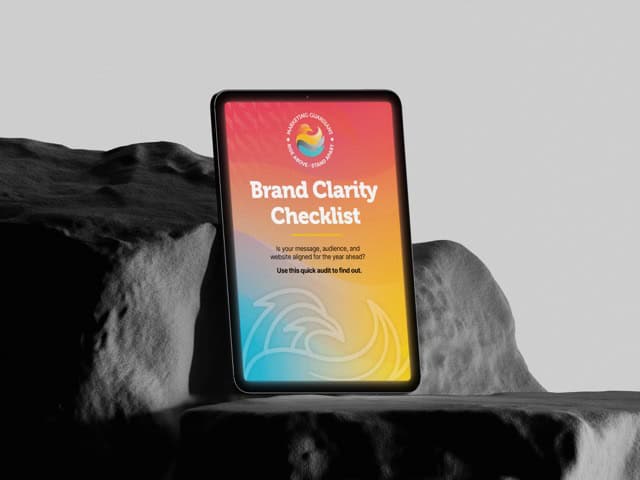
Get Your Free Brand Clarity Checklist
The Brand Clarity Checklist is a quick audit you can run in about 10 minutes to see if your message, audience, and website are actually aligned, or if they are quietly working against each other.
What you will be auditing inside the checklist:
- Your Ideal Customer
- Your Core Messaging
- Your Website Homepage
- Strategic Alignment
If your score shows “close, but not quite,” you are in good company. Most teams do not have a marketing problem. They have a clarity problem that creates mixed signals, inconsistent leads, and wasted effort.