What Is a Content Marketing Subscription?
A content marketing subscription is an ongoing partnership where a marketing team delivers blog posts, newsletters, social media content, and video on a regular schedule. Instead of hiring freelancers for one-off projects, businesses lock in a recurring plan that covers multiple content strategy formats at once.
Think of it like a gym membership for your brand's online presence. Then you pay a set monthly rate. In return, you get a steady stream of fresh content built around your goals. Indeed, this model has gained traction as the broader subscription economy has grown. The global subscription market is projected to jump from $492 billion in 2024 to $1.5 trillion by 2033, reflecting a 13.3% annual growth rate. As a result, businesses and consumers alike prefer predictable, recurring value over one-time transactions.
Moreover, most content subscription providers offer tiered pricing. About 61% of subscription businesses provide at least three pricing levels. Consequently, whether you need two blog posts a month or a full content calendar with email, social, and video, there is a tier that fits your budget.
Ultimately, the key benefit is consistency. Rather than scrambling to publish when time allows, a subscription keeps your content creation pipeline running week after week.
Why Businesses Choose Subscription Content Models
Overall, a content marketing subscription removes the guesswork from planning. Specifically, when you know exactly what content ships each week, you can build your SEO strategy around it. Here are the main reasons businesses are making the switch:
- Cost predictability: Fixed monthly costs replace unpredictable freelancer invoices.
- SEO momentum: Consistent publishing signals search engines that your site is active and relevant.
- Brand voice consistency: The same team writes for you every time, so your tone stays uniform.
- Higher retention: Customers who engage with content weekly show 85% higher retention rates.
Additionally, email remains the top channel for growing a subscriber base. It drives 39% of new subscribers, outpacing paid ads at 27%. Meanwhile, blog posts rank as the third most popular content format at 38% and sit in the top five for ROI at 22.26%. Therefore, a blend of blog and email content, delivered on a set schedule, is one of the most effective content strategy formats available.
Furthermore, the top 20% of engaged users generate 72% of revenue for subscription businesses. Hence, keeping your best customers active with fresh, relevant content is not optional. It is essential. Behavior-based messaging, where you send content triggered by user actions, reduces churn by 17%. In addition, a subscription model makes this kind of targeted delivery possible because your content team is always producing new material. According to research on the subscription business model, subscription-first businesses now grow five times faster than the S&P 500.
How to Be an Effective Trendspotter for Your Content Calendar
One of the biggest advantages of a content marketing subscription is speed. For example, when a trend surfaces in your industry, you already have a team ready to create content around it. However, first you need to know how to be an effective trendspotter. Research points to four proven methods:
- Behavioral psychology: People rely on mental shortcuts when making decisions. Social proof, for example, drives engagement. If your audience sees others engaging with a topic, they follow. Use this insight to prioritize content around popular discussions.
- Anthropological investigation: Understanding cultural context helps your content resonate across different audiences. In contrast, what works in one market may fall flat in another without cultural awareness.
- Journalistic methods: Monitor niche forums, subreddits, and LinkedIn threads. Notably, these spaces reveal emerging topics before they hit mainstream media.
- Pre-mortem analysis: Assume a content initiative has already failed. Then work backward to find the gaps. Accordingly, this approach helps you avoid blind spots before they cost you time and money.
Also worth noting: nearly 40% of young people now search TikTok or Instagram instead of Google for recommendations. So social platforms are not just distribution channels for your social media for blog strategy. They are trendspotting tools. A strong digital marketing strategy should include social listening as a core trendspotting tactic.
Tools and Tactics for Spotting Trends Early
Indeed, you do not need expensive software to stay ahead of the curve. Several free resources can help:
- Google Trends: Track search interest over time for any keyword. Compare topics side by side to see what is gaining momentum.
- Reddit and X: Browse industry-specific subreddits and hashtags for early signals.
- Government data portals: Sites like census.gov and statcan.gc.ca provide demographic and economic data that can reveal shifts in consumer behavior.
- Industry publications: Trade journals often cover niche developments months before mainstream outlets pick them up.
Curiosity is your greatest asset here. Avoid confirmation bias by actively seeking data that challenges your assumptions. Similarly, the best trendspotters ask questions they do not already know the answer to.
Using Social Media for Blog Growth
Social media and blog content work best when they support each other. Therefore, a content marketing subscription should include a plan for turning every blog post into multiple social assets. Here is why that matters:
First, user-generated content (UGC) outperforms branded content in trust. About 84% of consumers trust UGC more than brand-produced material, and 75% of marketers say it makes brands feel more authentic. Consequently, encouraging your audience to share their experiences with your products creates a feedback loop that amplifies your reach.
Second, short-form video is dominating engagement metrics. YouTube Shorts leads the pack at 5.91% engagement, followed by LinkedIn at 2.8%, TikTok at 2%, and Facebook at 1.4%. Accordingly, repurposing blog content into 30-second video clips for these platforms extends the lifespan of every article you publish.
Third, interactive content generates two to three times more engagement than static posts. About 62% of users prefer interactive formats like polls, quizzes, and calculators. These tools also hold attention 38% longer than traditional posts. For example, consider turning key blog takeaways into interactive carousels or quizzes for your social channels.
While 48% of marketers share similar content across platforms with minor tweaks, platform-specific optimization performs better. In particular, a LinkedIn post should read differently than an Instagram caption. Your social media management team should tailor each piece to the platform's audience and algorithm. As noted in Wikipedia's overview of social media marketing, platform-native content consistently outperforms cross-posted material in both reach and engagement.
Getting Started with Your Content Subscription
Ultimately, choosing the right content partner starts with knowing what to look for. Here are the essentials:
- Editorial calendar planning: Your partner should map out topics weeks in advance, aligned with your business goals and keyword targets.
- SEO integration: Every piece of content should be optimized for search from the start, not as an afterthought.
- Multi-format delivery: Blog posts, email newsletters, social content, and video should all be part of the package.
- Regular content audits: A good partner reviews past performance and adjusts strategy based on what works.
Email deserves special attention in any content marketing subscription plan. Moreover, newsletter platforms have seen massive growth, with email dispatches jumping from 402 million in 2021 to 15.6 billion in 2024. By 2027, an estimated 4.89 billion people worldwide will use email. That is more than half the global population. Thus, if your content subscription does not include email, you are leaving your most effective channel on the table.
Marketing Guardians provides structured content subscriptions that cover blog writing, email campaigns, social media, and strategy. Every plan includes documented standards, clear ownership, and regular performance reviews. The goal is simple: keep your content fresh, your audience engaged, and your brand growing month after month.
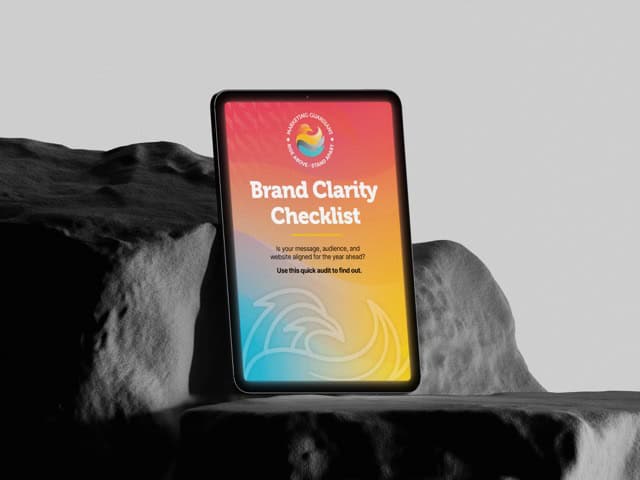
Get Your Free Brand Clarity Checklist
The Brand Clarity Checklist is a quick audit you can run in about 10 minutes to see if your message, audience, and website are actually aligned, or if they are quietly working against each other.
What you will be auditing inside the checklist:
- Your Ideal Customer
- Your Core Messaging
- Your Website Homepage
- Strategic Alignment
If your score shows “close, but not quite,” you are in good company. Most teams do not have a marketing problem. They have a clarity problem that creates mixed signals, inconsistent leads, and wasted effort.