Why Ideal Customer Profiles Matter
Many businesses operate under the assumption that more leads equal more revenue. In reality, not all leads are created equal. Pursuing the wrong prospects wastes resources, frustrates sales teams and dilutes your marketing message. An Ideal Customer Profile (ICP) clarifies who benefits most from your product and who doesn’t. It is more than a demographic snapshot; it includes readiness, willingness, ability and alignment. When you know your ICP, you can tailor your marketing to attract better leads, reduce churn and build stronger relationships.
Beyond Basic Demographics
A good ICP goes beyond age, income and job title. Lean B2B experts suggest evaluating prospects on seven criteria: 1) they recognise the problem you solve, 2) they are urgently looking for a solution, 3) they have the budget and authority to buy, 4) they can succeed with your product, 5) they are cost‑effective to acquire, 6) they have potential for expansion and 7) they can become advocates. When you assess prospects against these factors, you filter out leads that won’t convert or churn quickly. For example, a company may have the budget but lack urgency, resulting in stalled deals. Another may be urgent but not have internal resources to implement your solution successfully.
The Seven Questions
Do they recognise the problem? If your prospect doesn’t see the pain point, you’ll spend more time educating than selling. Start conversations with prospects who already feel the pain.
Are they motivated to solve it? Urgency matters. A prospect who acknowledges a problem but is content to tolerate it is not an ideal customer. Gauge their motivation by asking about recent initiatives to address the issue.
Do they have budget and authority? Even a motivated prospect cannot buy without resources. Ask about budget cycles and decision‑makers early in the conversation.
Can they be successful with your product? Some prospects are a poor fit because of size, infrastructure or culture. Your solution might be too complex or too simple for them. Look for alignment between your product’s capabilities and their maturity.
Are they cost‑effective to acquire? Some customers require extensive customisation or support, which eats into margins. Others may be easier to onboard and maintain. Choose the latter when possible.
Do they have room to grow? Ideal customers often expand usage or purchase additional services. A one‑off project can be lucrative, but customers with ongoing potential provide stable revenue.
Are they likely to advocate for you? Customers who speak positively about your product attract others. Their testimonials and referrals become marketing assets.
Applying the Template
Creating an ICP is an iterative process. Start by analysing your existing customer base. Identify your most successful customers—those who derive the most value from your product and are the easiest to work with. Look for patterns. Do they share common characteristics in size, industry or challenge? Do they fit the seven criteria? Then craft a narrative describing a typical ideal customer. For example, “Our ideal customer is a 100‑to‑300‑employee software company with a distributed workforce, led by a tech‑savvy operations director who is frustrated by manual workflows. They are actively seeking automation solutions and have a budget allocated to improve efficiency.”
Once you have a draft, test it. Use targeted marketing campaigns to attract prospects who fit the profile. If the leads you generate convert at a higher rate and are easier to retain, you’re on the right track. If not, refine the criteria. Over time, your ICP will evolve with your product and market. However, resist the temptation to broaden it prematurely. As the growth strategist Peep Laja notes, market leaders often succeed by focusing on a small, definable segment and dominating it before expanding.
A Real World Example
Consider a SaaS company that provides workflow automation for legal firms. At launch, they targeted any law firm with at least ten employees. Their sales team spent months educating prospective customers about the benefits of automation. Many leads stalled because the partners were comfortable with existing processes or lacked budget authority. The company revisited its ICP and found that their most satisfied clients shared certain traits: they were mid‑sized firms (50–100 employees), had a dedicated operations manager and had recently grown through acquisition, leading to process chaos. They cared deeply about efficiency because they needed to integrate different systems quickly. They also had budget authority because the operations manager reported directly to the managing partner. When the company narrowed its ICP to this specific segment, their messaging resonated more and their sales cycle shortened. They generated fewer leads overall but more qualified opportunities, resulting in higher revenue and lower churn.
Conclusion: Quality Over Quantity
An ideal customer profile is not a theoretical exercise; it’s a strategic tool. It helps you allocate marketing resources efficiently, create messages that resonate and build products that serve real needs. By using criteria like readiness, urgency, budget, success potential, cost of acquisition, expansion opportunity and advocacy likelihood, you filter out bad leads and focus on prospects who will become loyal customers. This focus strengthens your brand and yields healthier growth. Resist the urge to broaden your ICP too quickly; clarity and discipline are the foundation of sustainable success.
Knowing who you serve makes everything simpler. Marketing Guardians can help you define and refine your ideal customer profile, ensuring your marketing and sales efforts hit the mark. Reach out if you’re ready to stop guessing and start targeting.
Sources
www.leanb2bbook.com/blog/how-create-ideal-customer-profile-b2b-customer-development/
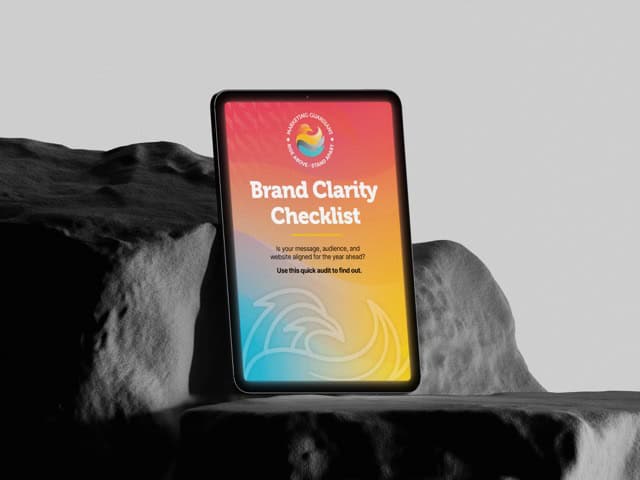
Get Your Free Brand Clarity Checklist
The Brand Clarity Checklist is a quick audit you can run in about 10 minutes to see if your message, audience, and website are actually aligned, or if they are quietly working against each other.
What you will be auditing inside the checklist:
- Your Ideal Customer
- Your Core Messaging
- Your Website Homepage
- Strategic Alignment
If your score shows “close, but not quite,” you are in good company. Most teams do not have a marketing problem. They have a clarity problem that creates mixed signals, inconsistent leads, and wasted effort.