How to Get More Snapchat Story Views in 2026: A Practical Guide for Businesses
Snapchat has always played by its own rules — and that's exactly what makes it both challenging and rewarding for businesses. Unlike Instagram or TikTok, where discoverability is baked into the algorithm from the start, Snapchat was built around close friendships, private conversations, and content that disappears. That architecture is still at the core of the platform in 2026, which means growing your story views takes intention, consistency, and a platform-native approach.
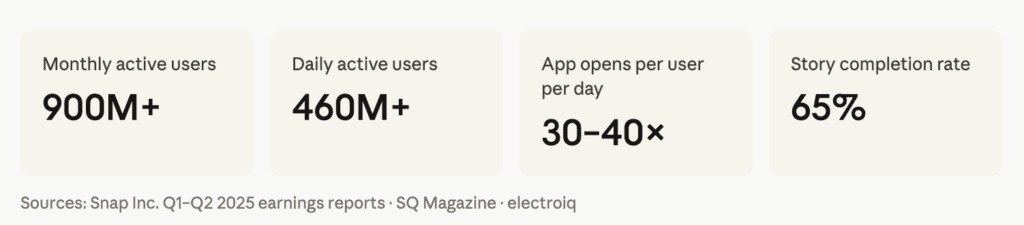
The good news is that the audience is absolutely there. Snapchat now has over 900 million monthly active users, and as of 2025, the platform sees 453 million active users daily. Users open Snapchat nearly 40 times a day to connect with friends, check on an interest, or make purchase decisions. For businesses willing to work within the platform's unique dynamics, that level of daily habitual engagement is a genuine opportunity.
Here is what actually moves the needle on Snapchat story views in 2026.
Understand Why Snapchat Views Are Harder to Come By
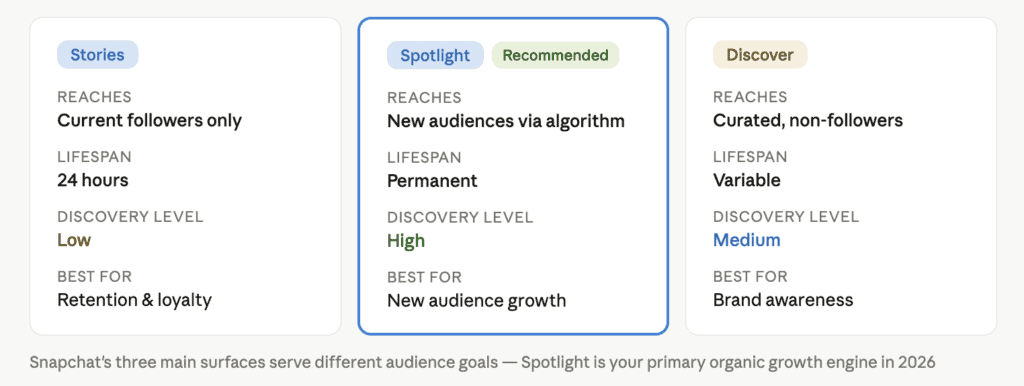
Before diving into tactics, it's worth understanding the structural reason why Snapchat discoverability is different. The platform was designed around reciprocal relationships — you add someone, they add you back. Content doesn't automatically surface to strangers the way it does on TikTok or Instagram Reels. Outside of Spotlight and the Discover page, Snapchat functions more like a private broadcast network than an open social feed.
This matters because it means your growth strategy has to work on two tracks simultaneously: keeping current followers engaged enough to share your content, while actively creating pathways for new viewers to find you. Most businesses only do one or the other — and that's why their view counts stall.
Leverage Spotlight — Snapchat's Discovery Engine
If your business has not yet embraced Snapchat Spotlight, 2026 is the year to start. Spotlight is Snapchat's short-form video feed — think vertical, sound-on, swipeable content similar in format to TikTok or Instagram Reels. Unlike your regular story, Spotlight content is surfaced algorithmically to users who don't follow you, making it the most powerful organic discovery tool on the platform.
In Q1 2025, Spotlight drew 550 million monthly active users on average, contributing over 40% of total time spent on the platform. That's not a niche feature — that's where a massive share of Snapchat's attention is concentrated. SQ Magazine
To get traction on Spotlight, create short, vertical videos that hook the viewer in the first two seconds, stay within your niche, and post consistently. Sticking to a specific niche and consistently creating related content helps attract and retain a loyal audience — constantly switching topics can alienate followers and confuse the algorithm. Repurpose strong-performing story content into Spotlight to extend its reach beyond your existing subscribers.
Use Your Snapchat Score as a Trust Signal
Your Snapchat score is displayed on your profile and increases every time you send and receive a snap or story, indicating how active you are on the platform. This isn't just a vanity number. For businesses, a healthy, active Snapchat score signals to potential followers that there's a real, engaged presence behind the account — not a dormant brand page that gets updated once a quarter.
Treat your score as a proxy for account credibility. The more consistently you show up — sending snaps, responding to viewers, engaging with other content — the stronger that signal becomes. New visitors who land on your profile will see an active account and be far more likely to subscribe.
Make the Discover Page Work for You
The Discover page remains one of Snapchat's most visible surfaces. It's where publishers, brands, and creators with public profiles surface their stories to users who aren't yet following them. Getting onto Discover regularly is one of the highest-leverage moves a brand can make on the platform.
The practical steps: use location tags on your content when they're relevant, include trending and relevant topic tags, and ensure your content is published through a public profile rather than a personal account. Snapchat's algorithm favours content that generates strong early completion rates, so prioritize short, high-retention stories with a clear hook at the start.
Snapchat Stories have a 65% completion rate and users open the platform more than 30 times a day, primarily for personal communication with friends. That completion rate tells you something important: Snapchat users who start watching tend to follow through. Your job is to earn that first tap.
Take Advantage of AR Lenses and Interactive Features
One of Snapchat's genuine differentiators in 2026 is its augmented reality ecosystem. Snapchat's AR campaigns deliver up to 2.4 times the ad awareness lift of standard formats, 1.8 times the brand awareness, and 1.4 times the brand association compared to non-AR formats. Even at the organic level, adding interactive stickers, branded filters, and lenses to your stories dramatically increases the likelihood that viewers will engage with and share your content. SQ Magazine
Every story you publish should include your Snapcode as a sticker. A Snapcode is a unique QR code tied to your account — when another user scans it through the Snapchat camera, they're immediately directed to your profile and can add you. Embedding your Snapcode in every piece of story content turns each view into a potential follower acquisition moment.
Cross-Promote Strategically — But Keep Content Platform-Native
One of the most reliable ways to grow your Snapchat audience is to leverage audiences you've already built on other platforms. Your Instagram, LinkedIn, YouTube, or email list is a warm audience that already trusts you — they just don't know you're on Snapchat yet.
If you maintain a presence on other social platforms like Instagram, TikTok, or YouTube, share your Snapcode or username in captions, bios, and posts to encourage existing followers to connect with you on Snapchat.
That said, the single biggest cross-promotion mistake businesses make is recycling identical content from platform to platform. Snapchat users expect content that feels personal, unpolished, and native to the app — not a reposted Instagram Reel. Use your other channels to tell people why to follow you on Snapchat (exclusive content, behind-the-scenes access, first looks) and then actually deliver something different when they arrive.
Post Consistently — And at the Right Time
Consistency on Snapchat is not optional. The platform's algorithm rewards accounts that post regularly, and your stories are ephemeral by nature — they disappear within 24 hours, which means there's no archive working in your favour the way there might be on YouTube or a blog.
Posting at times when your audience is most likely to be active — such as evenings and weekends — ensures more eyes on your content and signals to the algorithm to push it to more viewers. For most business audiences, early mornings during commutes and evenings between 7–10 PM tend to generate the highest engagement. Test your specific audience's patterns using the insights available in your public profile analytics. GetAFollower
Quality is non-negotiable, but quantity matters too. The more valuable content you produce, the more your current followers share it — and sharing is how organic reach compounds on a friend-first platform.
Consider Snapchat's Paid Promote Feature for Amplification
Organic reach has a ceiling on every social platform. For businesses serious about accelerating growth, Snapchat's Promote feature — available directly from your public profile — lets you turn any Spotlight post, public story, or saved content into a paid ad without leaving the app.
Advertisers optimizing for "More Views" with Snapchat's Promote feature see an average cost per thousand impressions of just $0.57. For context, 85% of Snapchatters say Sponsored Snaps feel "relevant to me" and "fit in with my habits on the platform," suggesting that paid content, when done well, doesn't feel intrusive to this audience — it feels natural. Snapchat for BusinessSnapchat for Business
This is a meaningful advantage for small and mid-sized businesses working with limited ad budgets. Snapchat ads start at just $5 per day, and spending up to $50 earns ad credits to extend your reach further.
The Bottom Line
Snapchat rewards businesses that commit to the platform on its own terms. That means publishing consistently, creating content that feels genuine rather than polished, using Spotlight as your primary discovery engine, and making it as easy as possible for new viewers to find and follow you. The audience is large, highly engaged, and — critically — Gen Z and millennial parents on Snapchat convert at the highest purchase rate of any life stage on the platform, with 70% having made purchases influenced by what they saw on Snapchat. Sprout Social
The brands winning on Snapchat in 2026 are not the ones with the biggest budgets or the most polished content teams. They are the ones that show up daily, act like a real presence rather than a broadcaster, and use every tool the platform offers — from AR stickers to Spotlight to the Snapcode on every single story — to make it effortless for new viewers to stay.
Ready to build a social media strategy that drives real results across every platform? Marketing Guardians works with growing businesses to turn content into a consistent, revenue-connected system — not just activity. Let's talk.
FAQs
Is Snapchat still worth it for businesses in 2026?
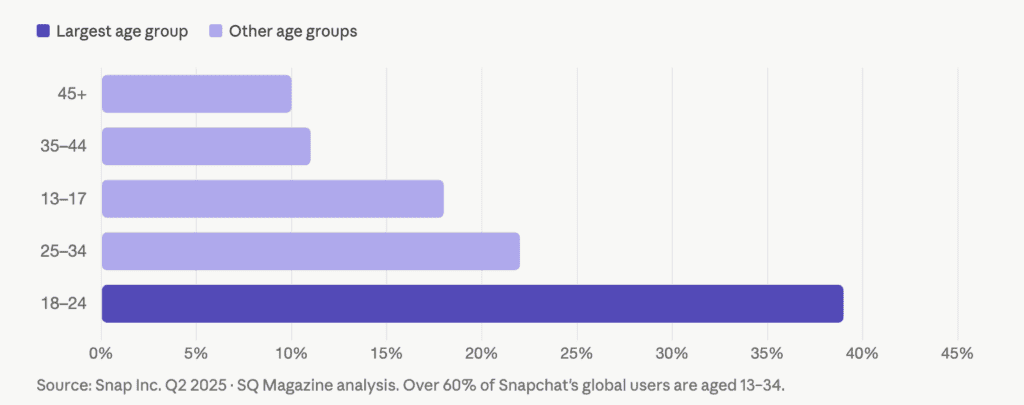
Yes, for businesses targeting audiences aged 13–34. With over 900 million monthly active users and a 65% story completion rate, Snapchat has more engaged daily users than most marketers realize. The platform is worth prioritizing if your buyer skews younger, values personal brand communication, or operates in consumer-facing industries like retail, food and beverage, fitness, hospitality, or entertainment.
How many times a day should a business post on Snapchat Stories?
Aim for two to four stories per day, spaced throughout the day rather than posted all at once. Snapchat surfaces the most recently updated stories at the top of a follower's feed, so consistent posting throughout the day keeps your account visible. Quality matters more than volume — every story should deliver something specific, whether that's a tip, a behind-the-scenes clip, a product update, or a piece of value your audience can't get elsewhere.
What is the difference between a Snapchat Story and a Spotlight post?
A Story is shared only with your current followers and disappears after 24 hours. A Spotlight post is algorithmically distributed to users who don't follow you, stays on your profile permanently, and functions much like a TikTok or Instagram Reel. For businesses trying to grow their audience, Spotlight is the higher-leverage format because it creates the possibility of reaching new viewers without paid promotion.
What kind of content works best on Snapchat Spotlight?
Short, vertical, sound-on videos that hook the viewer within the first two seconds perform best. Content that feels native to the platform — unpolished, personal, behind-the-scenes, or trend-adjacent — consistently outperforms corporate-style content. Tutorials, quick tips, reactions, and authentic brand moments tend to generate the strongest watch time and shares, which are the signals Spotlight's algorithm rewards.
Does Snapchat work for B2B businesses?
Rarely as a primary channel, but it can play a supporting role for B2B brands whose buyers are personally active on Snapchat outside of work hours. Senior decision-makers in industries like construction, energy, real estate, and professional services are increasingly present on Snapchat as the 25–34 age group now makes up 22% of the platform's user base. The better use case for most B2B brands is using Snapchat for employer brand content, team culture, and event coverage rather than direct lead generation.
How long does it take to grow a meaningful Snapchat following?
Expect three to six months of consistent posting before organic momentum builds, assuming you are also using Spotlight regularly and cross-promoting on other platforms. Snapchat's friend-first architecture means early growth is slower than on TikTok or Instagram. Businesses that see the fastest growth are those that give followers a specific reason to add them on Snapchat — exclusive content, early access, or a behind-the-scenes experience that does not exist anywhere else.
Can Snapchat drive traffic to my website?
Yes, through swipe-up links attached to stories and Spotlight posts on public business profiles, and through direct calls to action in your content. Snapchat's link functionality is available to accounts with a verified public profile. That said, Snapchat is better treated as a brand awareness and relationship channel than a direct traffic driver — the platform's architecture prioritizes engagement and connection over click-through behaviour, so conversion goals are better served by pairing Snapchat with a retargeting campaign or a clear follow-up pathway.
How do I know if my Snapchat strategy is actually working?
The key metrics to track in Snapchat's public profile analytics are story views, Spotlight reach, subscriber growth rate, and story completion rate. A completion rate above 50% indicates your content is retaining viewers to the end. For Spotlight, watch total views and share rate rather than just impressions. If follower growth is stalling despite consistent posting, the issue is usually discovery — either your Spotlight output is too low or your cross-promotion on other platforms is not directing people to your Snapchat account.
Should I invest in Snapchat ads before growing my organic presence?
Building at least a baseline organic presence first is the better sequencing for most small and mid-sized businesses. Organic content tests what resonates with the Snapchat audience before you put budget behind it. Once you have two or three Spotlight posts or stories that perform well organically, using Snapchat's Promote feature to amplify those specific pieces is far more cost-effective than running cold paid campaigns from scratch. The platform's cost-per-thousand-impressions for promoted views averages $0.57, making it one of the more accessible paid channels once you have proven content to back it up.